

Recommended by the Lonely Planet Guide Books to the Hawaiian Islands
PURCHASE PAPERBACK OR PDF DIGITAL VERSION
426 pages mono and colour pages over 1000 photos / illustrations
soft cover perfect bound A5 210x 148 x 43mm (8.27" x 5.82")









“For anyone interested in the Pacific-wide sport of outrigger canoeing this is the definitive look at the sport!”
1. Oceania Va'a
Canoes of all manner of shape, size, construction and material, designed to function in a variety of aquatic environments, are present in most parts of the world. Va`a, which include an outrigger framework, are uniquely different from other types of ‘canoe’. Whether possessing a single or double-outrigger, double hulled, paddled or sailed, they were at their most prolific and developed to their highest form throughout the islands and cultures of Oceania (Melanesia, Micronesia, Polynesia) – though also present in Madagascar, the Comoro Islands, East Africa, Southern India, Sri Lanka, the Maldives and Indonesia.
2. Peoples of the Va'a
Polynesian culture was the last of the great Oceanic cultures to flourish and develop. The inherent skills of va`a architecture, seamanship and navigation acquired through the pioneering maritime skills of the Melanesians and Micronesians, undoubtedly paved the way for the Polynesian voyages across the vast expanse of the Pacific Ocean.
3. Ceremonies
The va`a was considered by many cultures of Oceania as a living entity, providing a direct link to their entire existence. It was a means of harvesting food from the ocean, a way to travel near or far, and on occasion, a vehicle for warfare and recreation. Felled and hollowed out, the living tree in some sense underwent a process of death and rebirth, as it was transformed from tree to va`a through the hands of ‘its creator’, and it held with it a great deal of spiritual significance. This was not the case for all va`a forms, as there existed a correlation between the size of the va`a, the effort required in its creation, the sourcing of the raw material, and the purpose for which it was intended.
“The Paddler’s Guide to Outrigger Canoeing, is an incredibly comprehensive and beautifully presented book covering everything to do with outrigger canoeing, from the technical aspects of the paddle stroke, steering, rigging and catching bumps, through to the cultural heritage and evolution of canoe designs, paddles and races. There is something for everyone in this amazing book, whether a new or experienced paddler. Every time I pick up this book I learn something new and am inspired by the stories and photographs.”
4. Hawaiian Historical Perspective
The va`a has been the principal mode of transportation in Oceania for thousands of years. While its direct role in everyday life throughout the Pacific region has diminished, giving way to the outboard motor and boats of contemporary design, va`a racing has created a renewal of the passion and an assurance that the legend of the va`a will live on forever and thereby nurturing the cultures from which they manifested. Wa`a racing evolved as a natural extension of the ancient Hawaiian's everyday relationship with the single-outrigger wa`a, which was used primarily for coastal fishing. While the ocean supplied most of their food, it also provided for their sport and recreation.
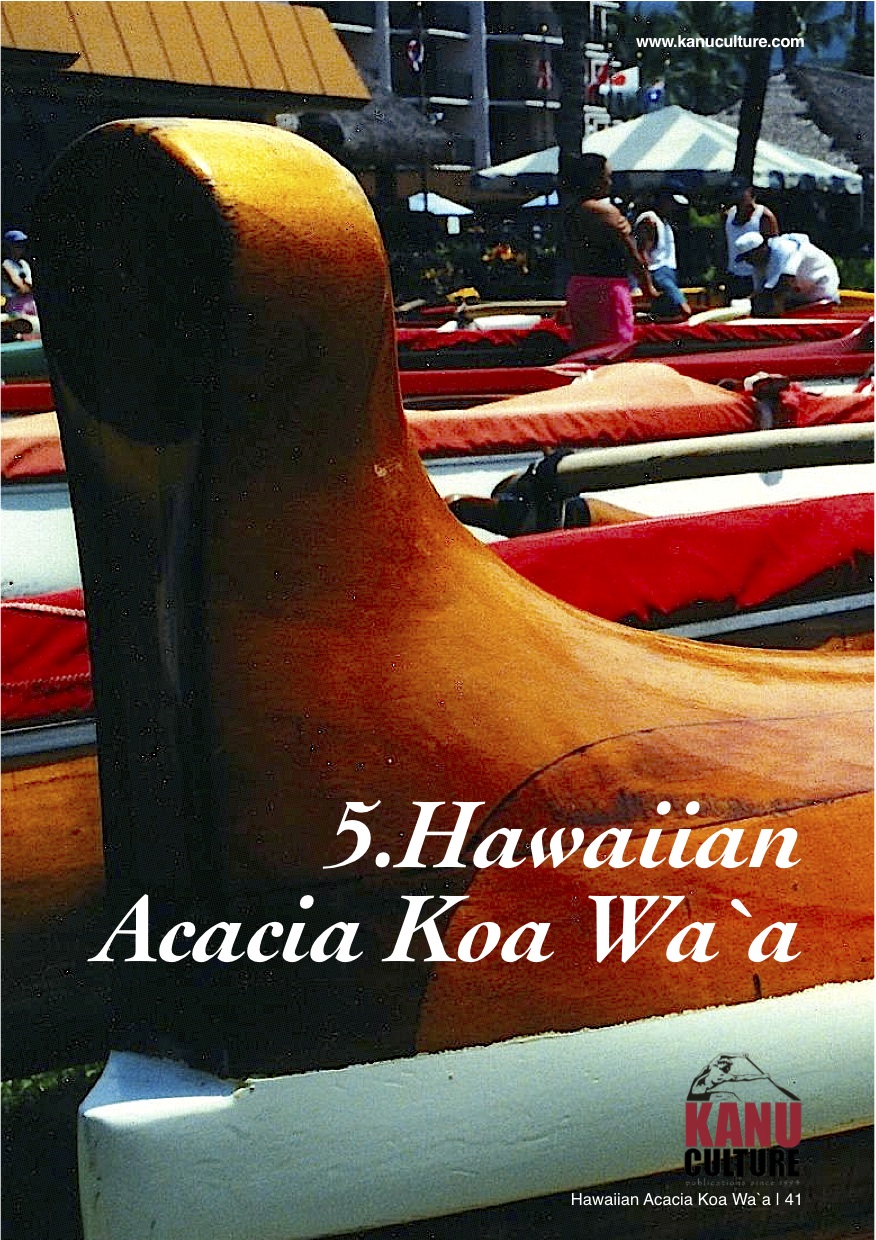
5. Hawaiian Acacia Koa Wa'a
A koa wa`a is a functional object of beauty, transcending conventional notions of art. It is a manifestation of vision and purity of purpose. The creation of a single wa`a requires a time line of several hundred years from the time the tree starts to grow, matures, is selected, felled or falls, blessed, carved and finally named, to be reborn once again in what is considered a living entity - the wa`a.
6. Design Limits
As the sport grew throughout the Hawaiian Islands, design specifications were introduced. Two major factors which lead to the introduction of the specifications were the influx of Tahitian designers into Hawai`i in the mid 1970s and the unprecedented 1976 victory of a Tahitian crew in Hawai`i’s prestigious Moloka`i to O`ahu race. While some native Hawaiians were involved, the changes were primarily brought about by Anglo-Hawaiians, setting out in strict empirical terms what defined an ‘Hawaiian’ team racing wa`a.
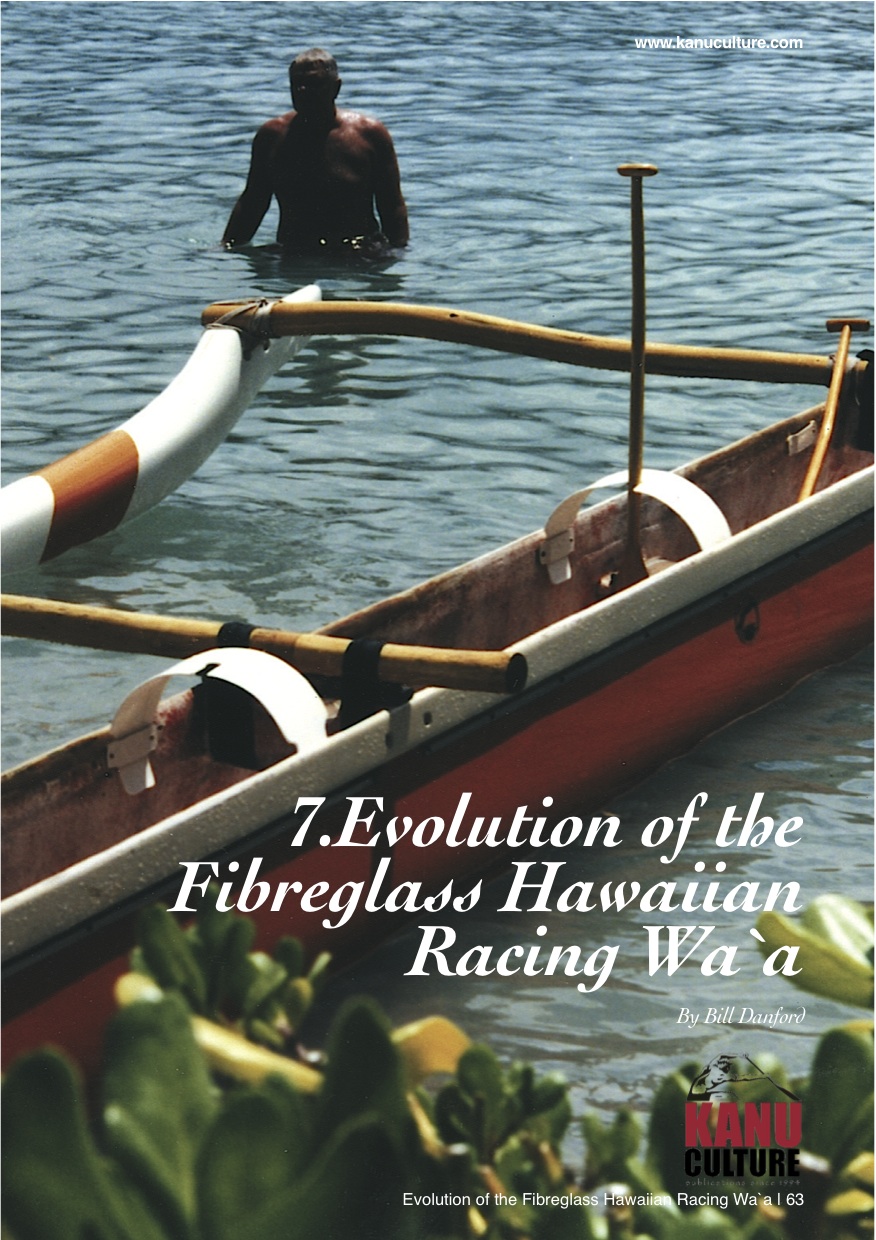
7. Evolution Fibreglass Hawaiian Wa'a
Over the past forty years, without the actions of a few, the sport of Hawaiian wa`a racing may have entered the twenty first century from a completely different direction. Had wa`a officials in Hawai`i in the 50s listened more intently to Louis Kahanamoku and ‘Toots’ Minieville, the introduction of the fibreglass Hawaiian wa`a may have developed more favourably and been accepted earlier than 1963. It is said that when Duke Kahanamoku was asked about the chance of the sport of Hawaiian wa`a racing taking roots on mainland USA, he voiced doubts as to whether it would gain any interest.
“The most important item a paddler should own, is The Paddler’s Guide to Outrigger Canoeing. Without the knowledge of how your equipment works, or where it comes from you may be spinning your wheels. This book is a great read and a must for every paddler. Even the most seasoned paddler will find a benefit to owning this book. For those of you that do get the book, don’t lend it out, you may never get it back!”
8. New Zealand Waka Ama
As with each successive discovery of new lands, the va`a became an integral part of ancient life. Historically, many waka (va`a) variations existed in Aotearoa, they were used for warfare, trading, voyaging and fishing. With an abundance of raw materials, the outrigger assembly itself was not as critical as it had been in many other island regions of the Pacific. Hulls could be built wide enough to create greater inherent stability and ‘voyaging’ was gradually coming to an end by this point in Polynesian history. Although waka with outrigger assemblies existed, they were ultimately not as prolific or produced with the same vigour as in tropical island regions.
9. Kanu Types
Euro-centric researchers and those who assisted in the development of the sport of wa`a racing, ignored the use of 'wa`a' in preference for ‘outrigger canoe’, perpetuating a disregard for the Hawaiian language and ultimately for the wa`a itself. The term ‘Hawaiian' outrigger canoe suggests there was but one single type of wa`a in use in ancient Hawai`i. In fact there was a broad and varied range of wa`a types, essentially originating from the Marquesas and Tahiti, modified to suit Hawaiian waters.
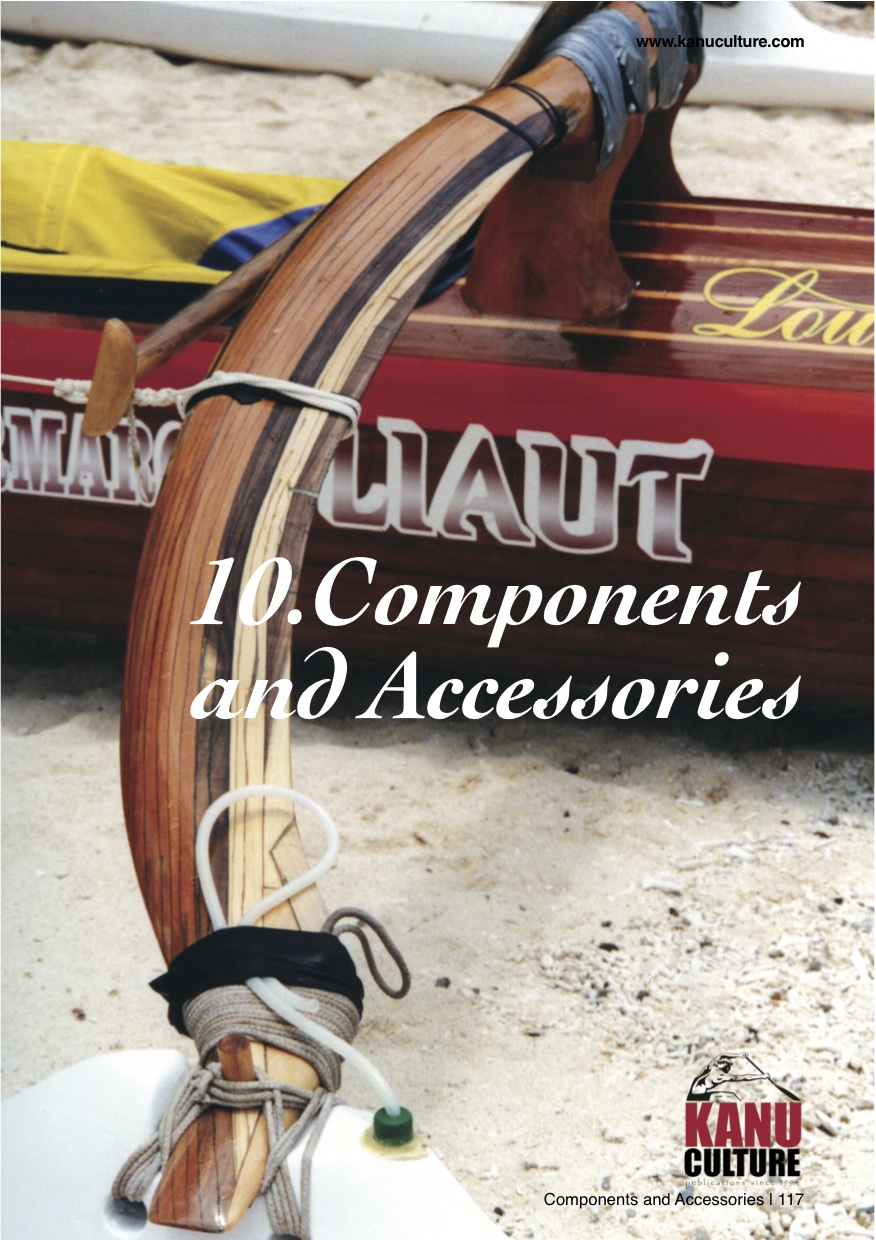
10. Wa'a Components and Accessories
For the purpose of this work, we are primarily concerned with today’s racing va`a, the likes of which are strongly influenced by Hawaiian and Tahitian artisans. While you could be forgiven for believing Hawai`i is the leader and dominate force in this unique paddle sport, the fact is, Tahitian influence is omnipresent. From these isolated exotic isles, a veritable plethora of knowledge and talent, serves as an aspirational chalice from which the rest of the world sips, but rarely gulps. This is due to the fact that the Tahitians are overshadowed by Hawaii’s ties and association with America to the extent that the notion of Hawai`i being a mythical isle, and a part of Polynesia, seems but a romantic notion long since forgotten.
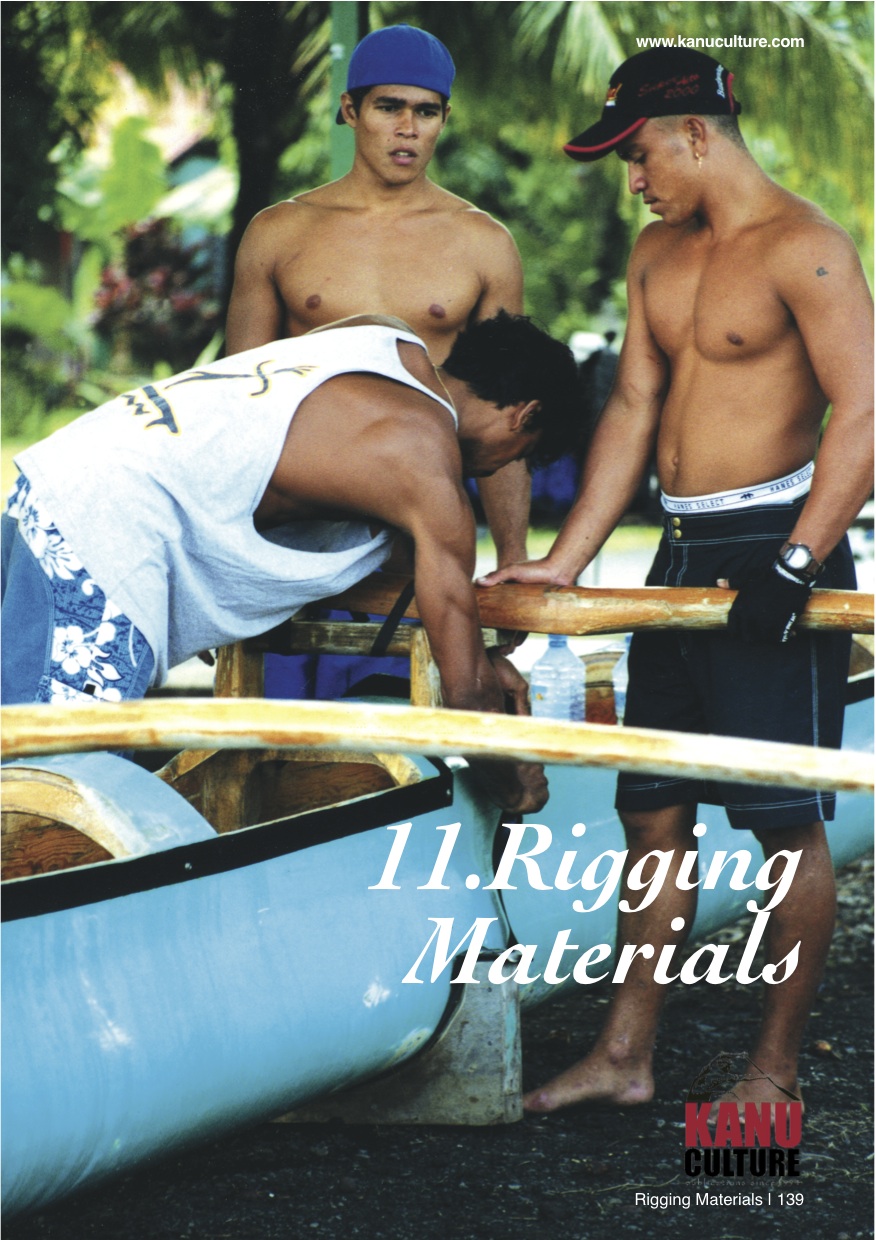
11. Rigging Materials
When it comes to selecting a suitable lashing material for rigging, it is necessary to consider the alternatives. Each type of fibre performs differently under stress, especially when wet and in a marine environment. Ideally, you do not want the lashing material used to be overly rigid or too flexible, it is the balance between these two qualities which form part of the art of `aha hoa wa`a or wa`a rigging.
12. Rigging Know How
If you paddle a team wa`a, then you better know how it all fits together. If you were a sailor, you would need to know how to rig your yacht, dinghy or windsurfer, so why should this be any different? Not only will it allow you to check your rigging before setting off, but you will also be able to re-rig slack rigging or replace it where necessary.
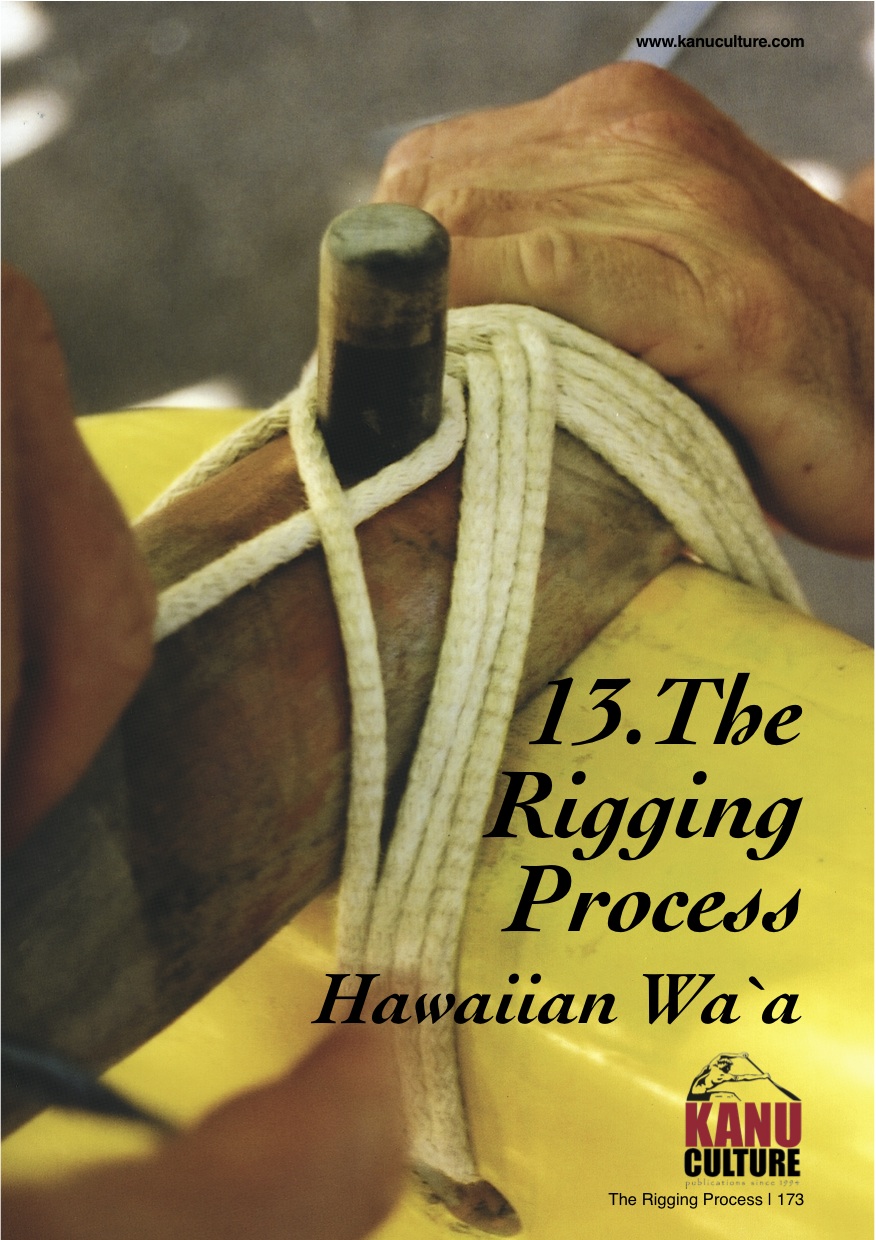
13. Rigging Process
The ancient Hawaiians used many different lashing configurations to secure the i`ako to the ama and the i`ako to the wa`a. However, today’s rigging process has been diluted to only a few lashing configurations, especially using cord. Whether rubber, cotton or webbing is used, the primary objective remains the same, to keep it all together. Each configuration performs uniquely and if a failure occurs, there are substantial differences.
“The Paddler’s Guide to Outrigger Canoeing, is the most comprehensive book on outrigger canoe paddling yet. Essential reading for novices and experienced paddler alike.”
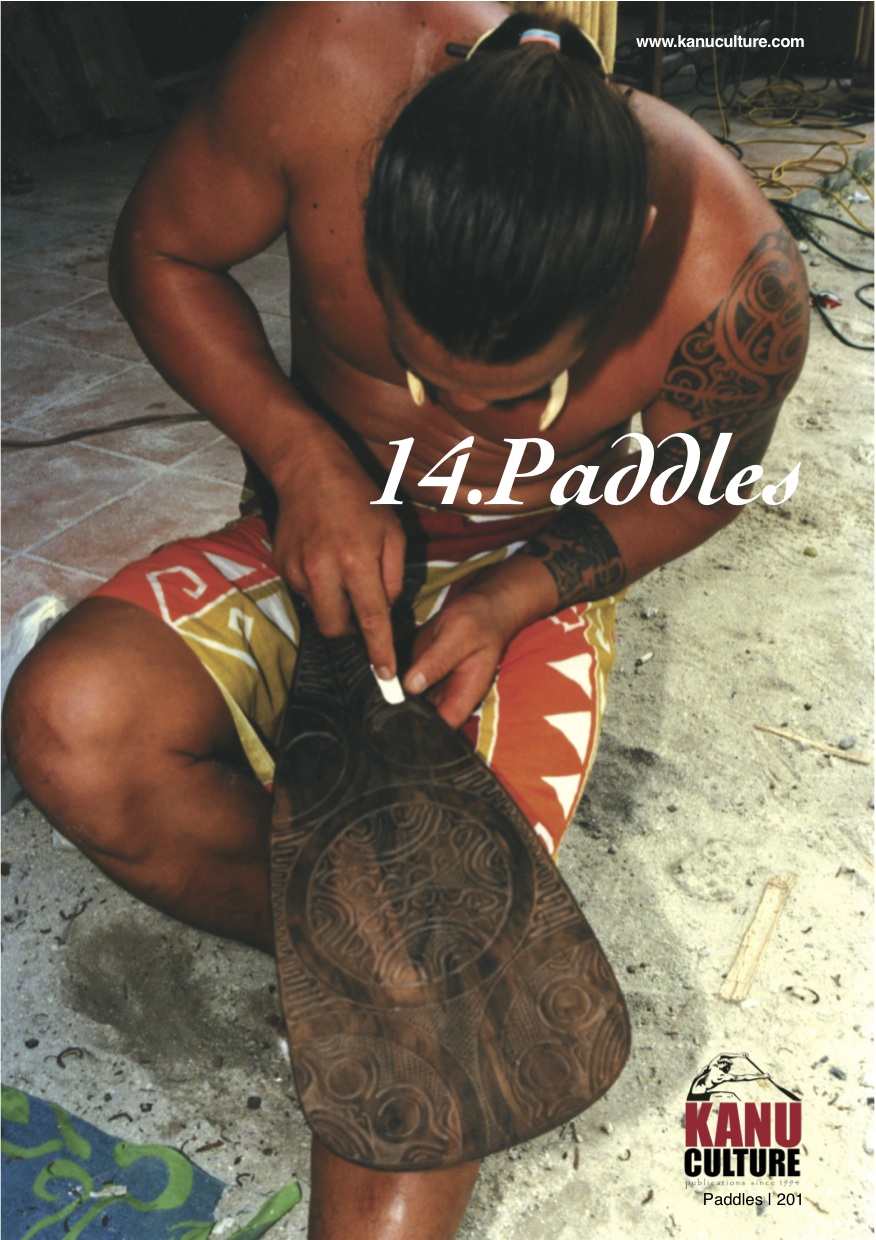
14. The Paddle
A well designed, handcrafted timber paddle is surely a work of art. Beautiful in form, soft to the touch, the va`a paddle represents to the paddler, the most important and expensive accessory they will purchase. More than just a handy implement for propulsion, the paddle has taken on powerful symbolism throughout many canoe-cultures. Its form has been revered in sculpture, jewellery and drawings. Even with the march of progress, whether all wood, carbon or a mix of materials, a well crafted paddle is the pinnacle of art, form and function.
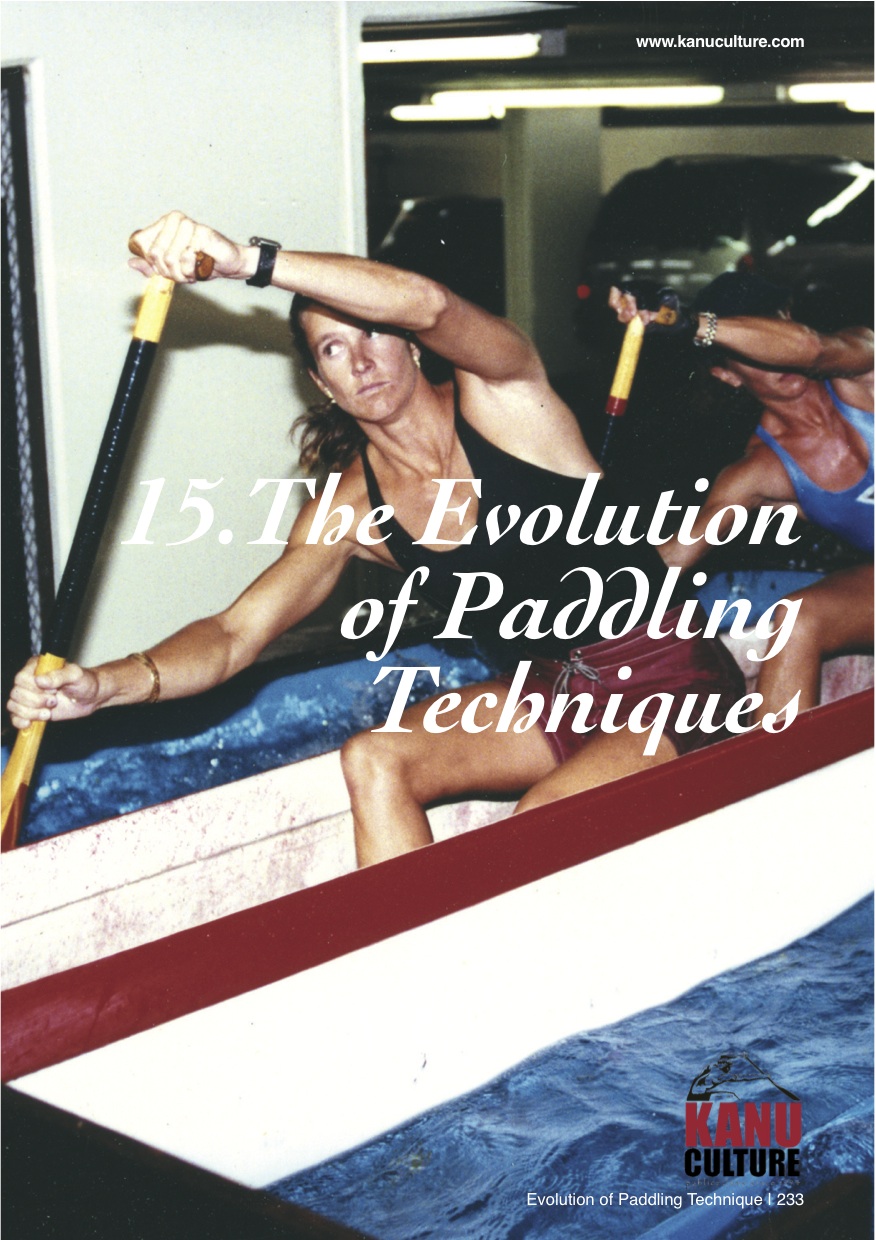
15. Evolution of Paddling Techniques
Prior to the arrival of the missionaries in the Hawaiian Islands in 1820, Hawaiians clearly had their own defined paddling style. For over fifty years however, when there was an effective ban on paddling, the intricate nuances of the Hawaiian paddling style were partially lost. Hawaiian wa`a paddling technique was introduced back into Hawai`i not through written text, but ideas passed down orally - a tribal dissemination of knowledge. It has been suggested that the so called ‘Hawaiian Style’ of paddling that was reintroduced, was not an accurate copy of the original, given that most of the elders had past on.
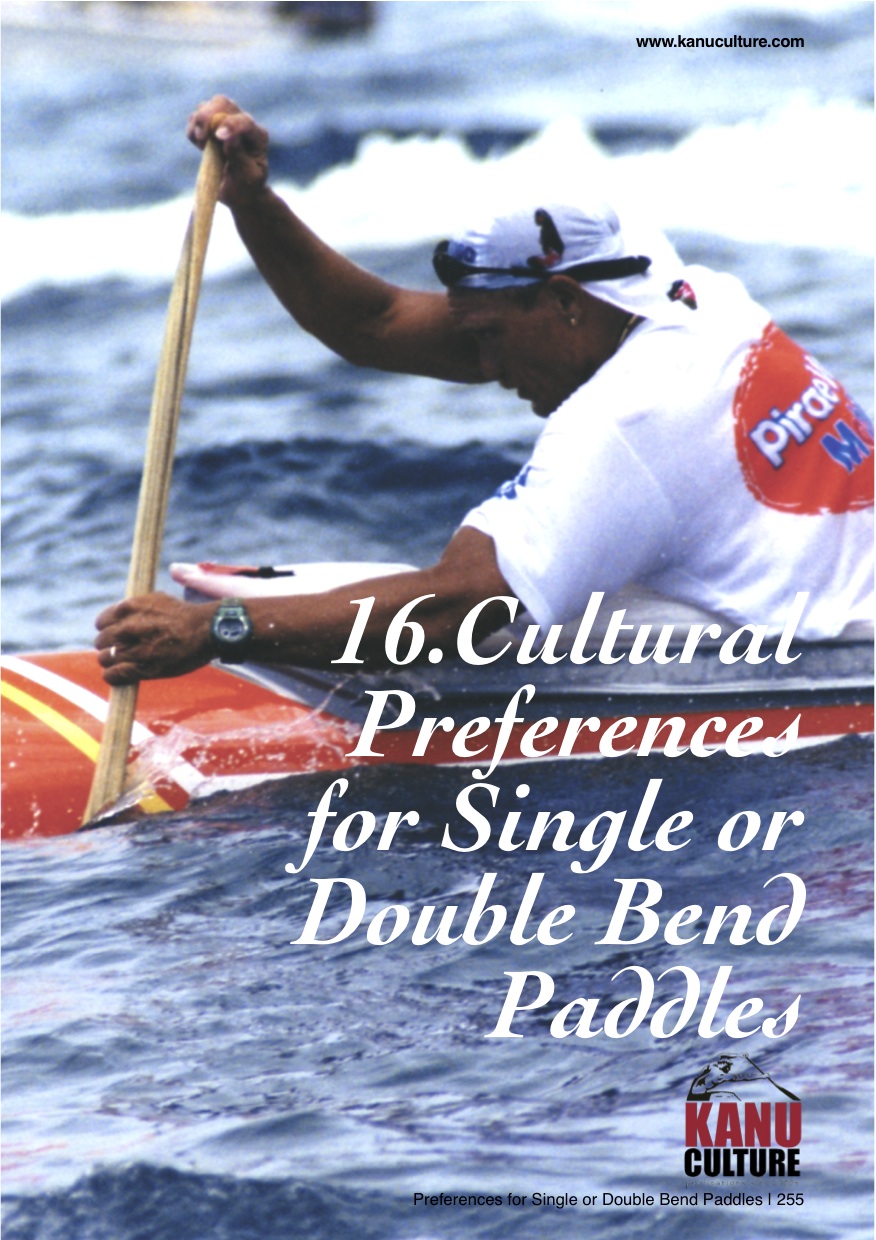
16. Single or Double Bend Paddles
The decision to use either a single or double-bend paddle is, for many paddlers, a decision based on ergonomics and how comfortable the paddle ‘feels’. However, we need to take this ‘feeling’ one step further. Through constant use of one type of paddle over another, techniques have been unintentionally developed that have subtle yet different paddling styles. Switching from a single to double-bend or vice versus, is not just a matter of a different paddle, but one of a different technique also.
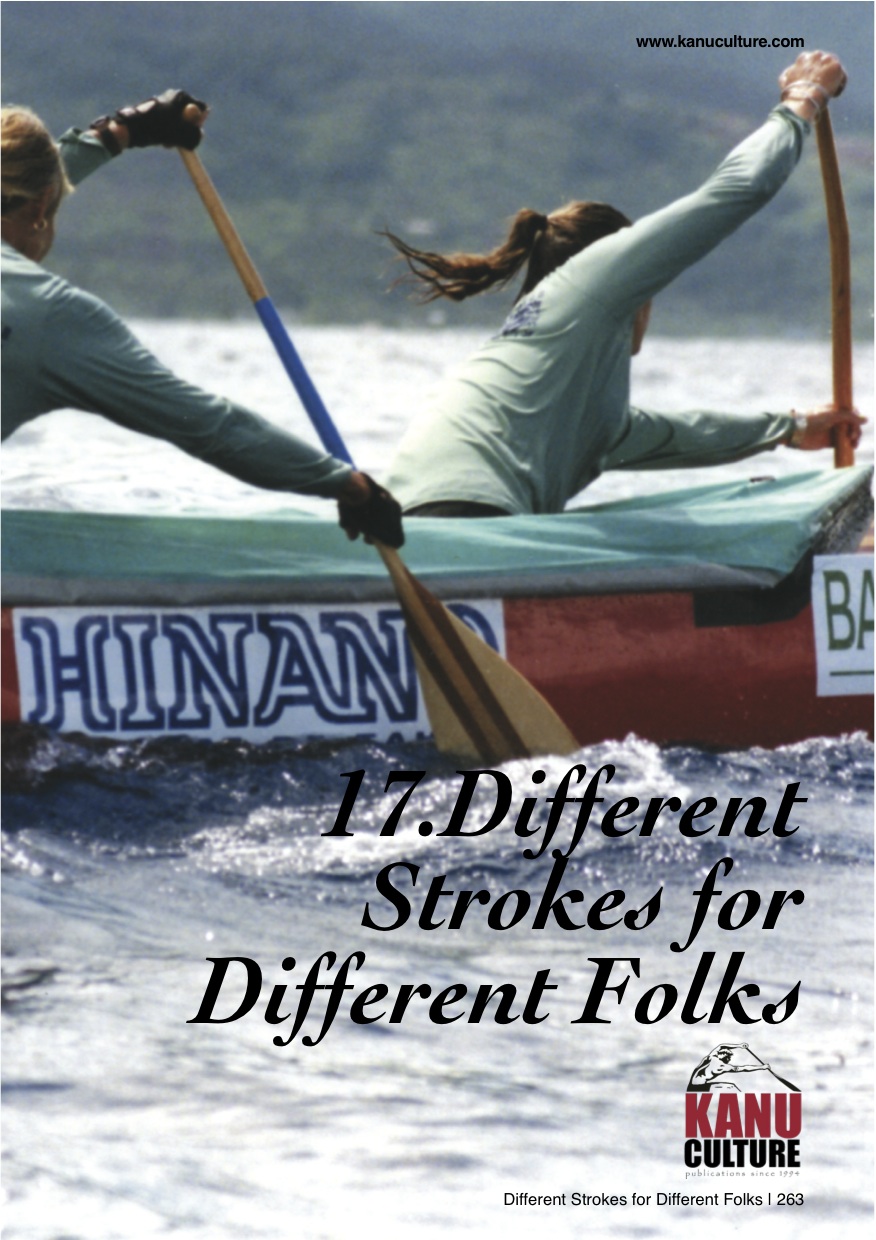
17. Different Strokes for Different Folks
In a rapidly changing sport, the wa`a racing paddler is increasingly concerned with perfecting a personal paddling style. While we may define a particular paddling technique as ‘best’ for a given paddle craft, we must remember that there is no one style that is best for all paddlers. Technique is essentially a defined how-to. Style is inherent to (and often limited by) the biomechanical and physiological make-up of the paddler. What suits the individual ‘best’ is what tends to work best.
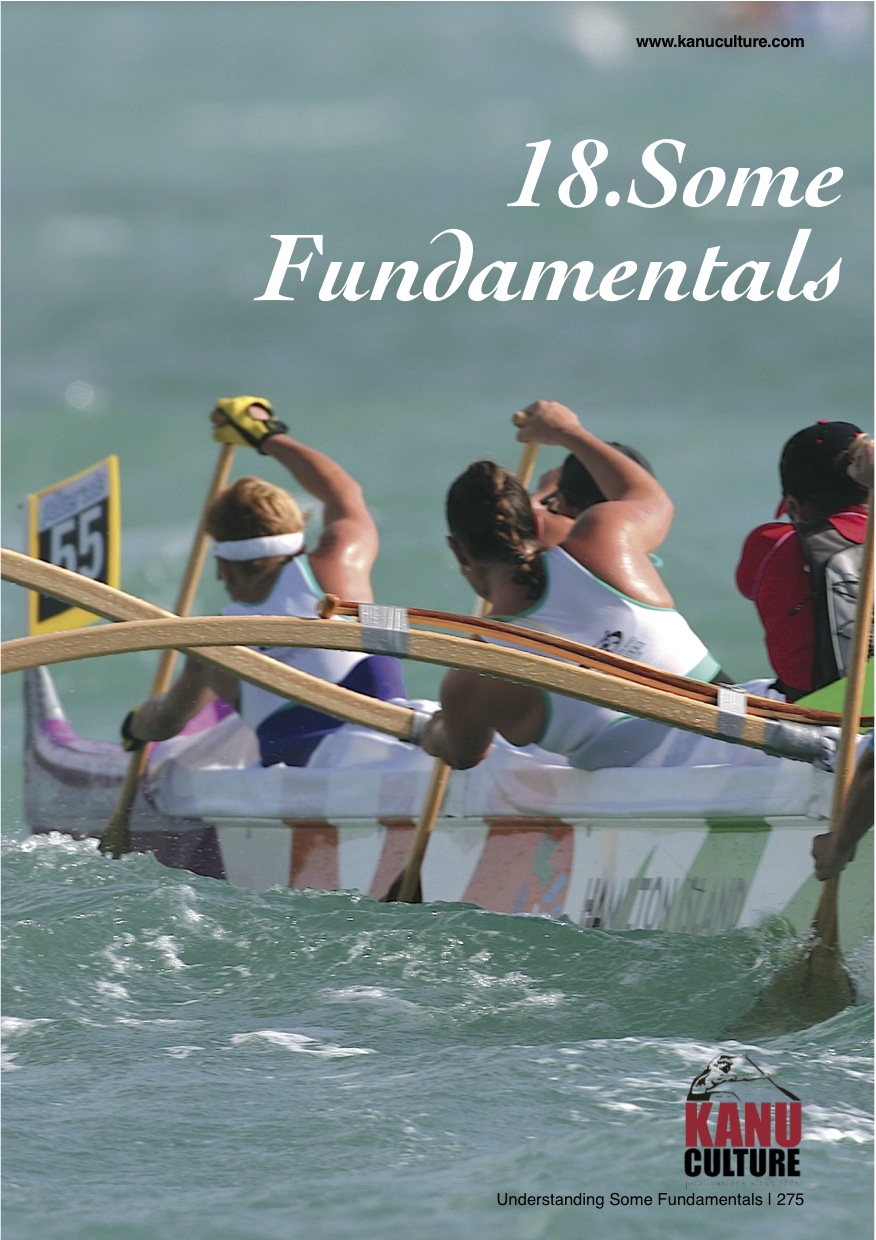
18. Fundamentals
There are some fundamentals paddle skills, commands and seat position rolls you should know. With regards to paddle skills, while this is generally termed 'technique', the 'how to' element of paddling, this will ultimately be affected by your individual 'style'. Your style, is an unavoidable consequence of your unique biomechanical and physiological make-up, which need not be a hindrance to sound technique, indeed some paddlers excel at being less conventional than others. Provided sound principles are being met then there is no reason why good should not make for a good paddler.
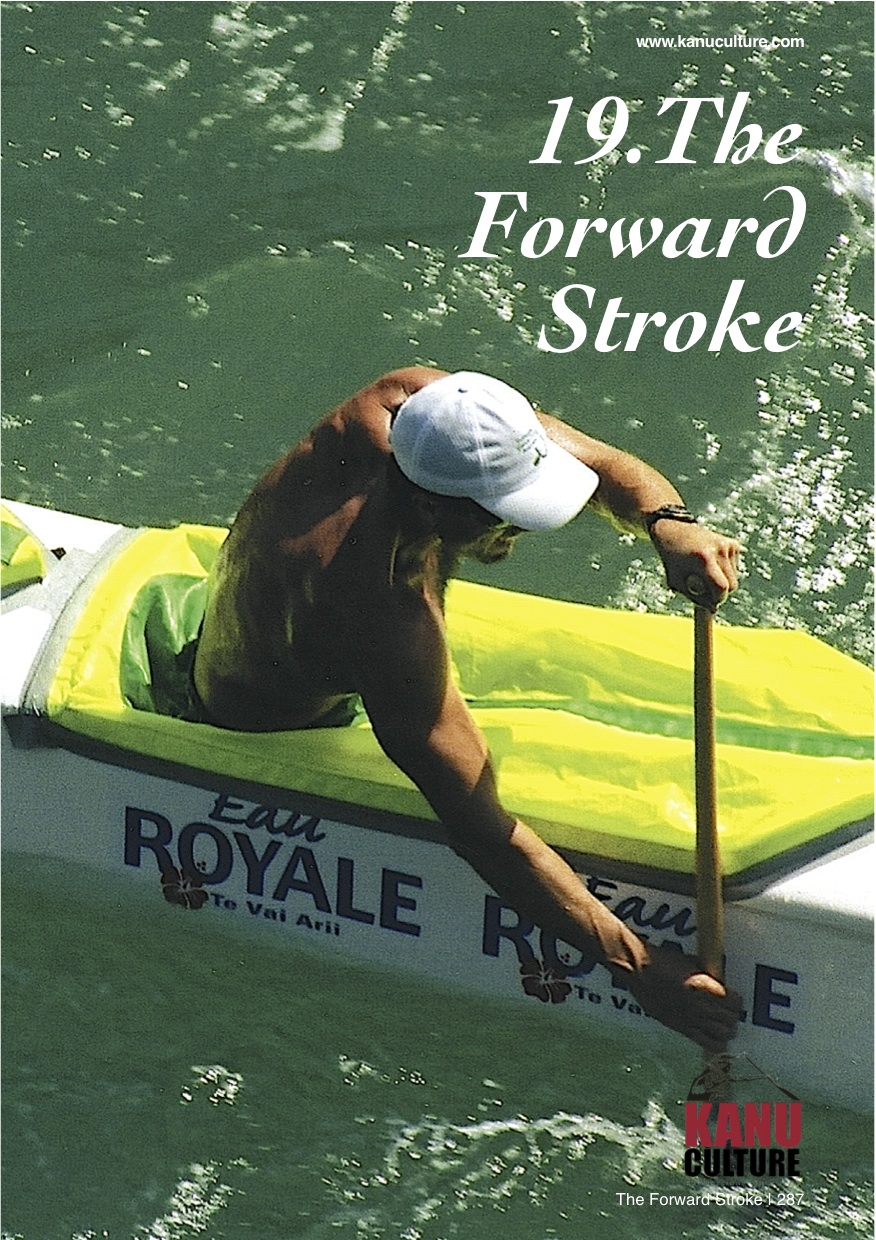
19. The Forward Stroke
Many arm-chair theories regarding the va`a paddling stroke exist yet they rarely considered the issue holistically. Dragon boat or C1 forward stroke theories certainly take into consideration the craft, the paddle and the paddler, yet when this cross-flow of opinion is dragged screaming into the context of the va`a, essential differences seem lost in the translation. They are mutually exclusive to each other, unique, different, in short they are poles apart.
20. Working with the Ocean
The term paddling ‘downwind’ is as it suggests paddling with the wind behind, chasing a moving or following sea. The experienced paddler reads the ocean as a series of ever rising and falling peaks and troughs or ‘bumps’ into which they steer their craft, attempting to remain on the ‘fastest’ sections which provide the most assistance - the downward slope or forward face. As a snow skier might move left and right to carve a path between the bumps as they ski down the mountain, the ocean paddler seeks a similar path. In the context of a team va`a, this skill comes down to the steerer.
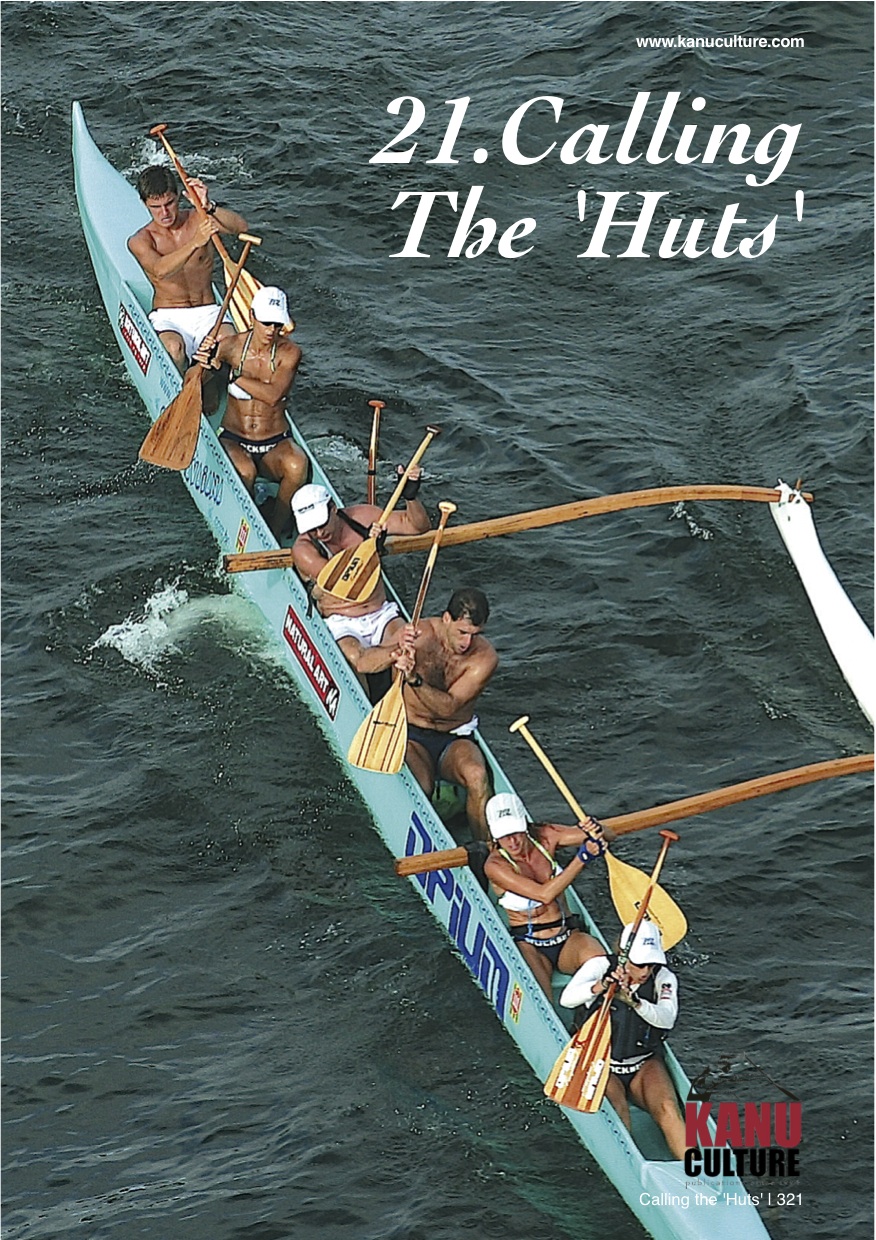
21. Calling the 'Huts'
It’s one of those things that is apparently so easy to do. No one ever tells you how to do it and it is taken for granted that anyone can do it. In reality, it’s a skill, an important detail which, like all the other details that go together to make a successful, well oiled crew, has the potential to either hinder or help you. As always, the tougher the race conditions the more crucial this calling becomes and the more expert you need to be in order to do it right.
22. Bailing
Bailing is one of the single biggest neglected concerns and it is a skill that many outrigger canoe paddlers lack. Bailing is seen by most to be a waste of time, incorrectly believing that it’s better to keep paddling to keep up the speed. However, the very thing that will contribute to an ultimate decrease in the speed of a va`a is the 30, 40, or 60lbs plus of water sloshing around underfoot.
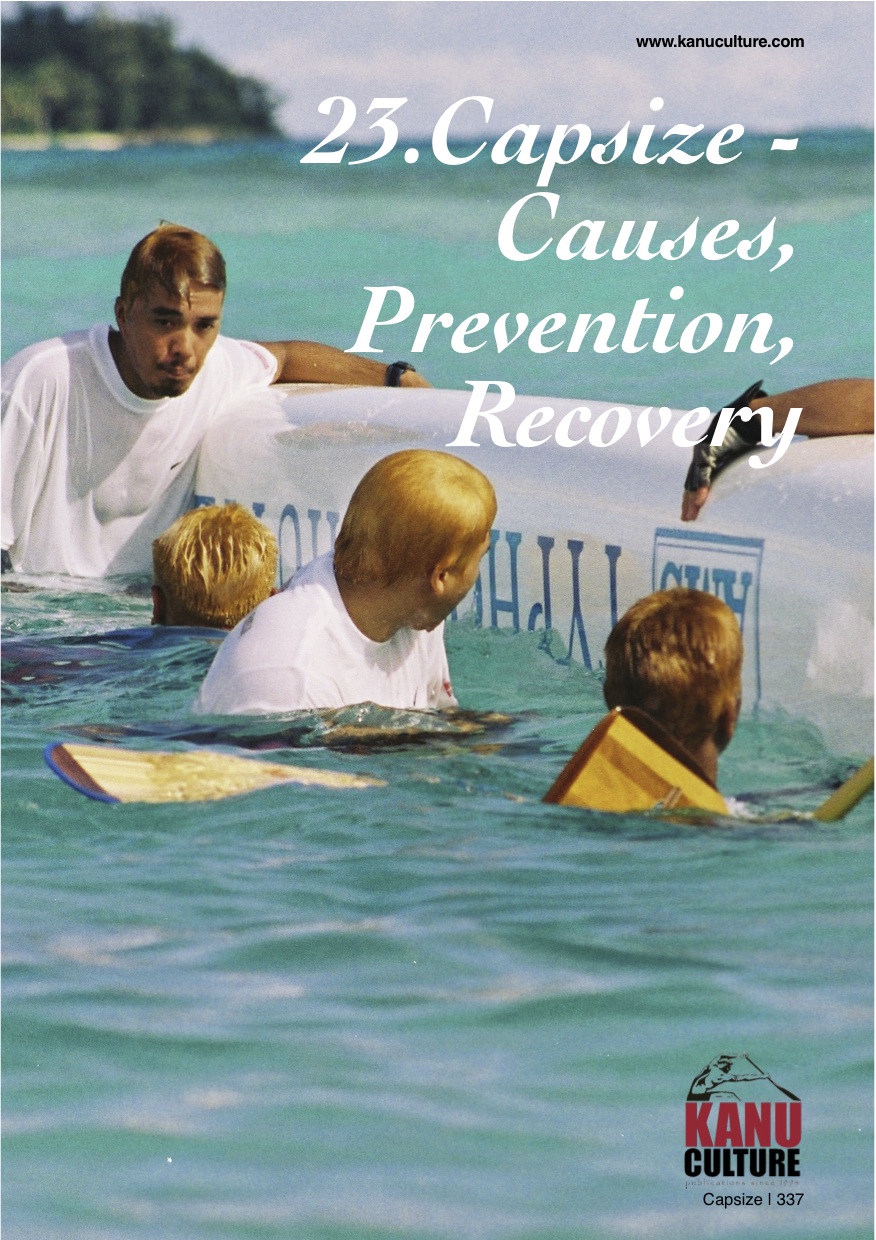
23. Capsize
The capsize of a wa`a is a very significant event, and the manner and speed with which the crew deals with it is critical. Though va`a are prone to capsize, the reality is that even when well rigged, capsize is nearly always due to the fault of the crew.
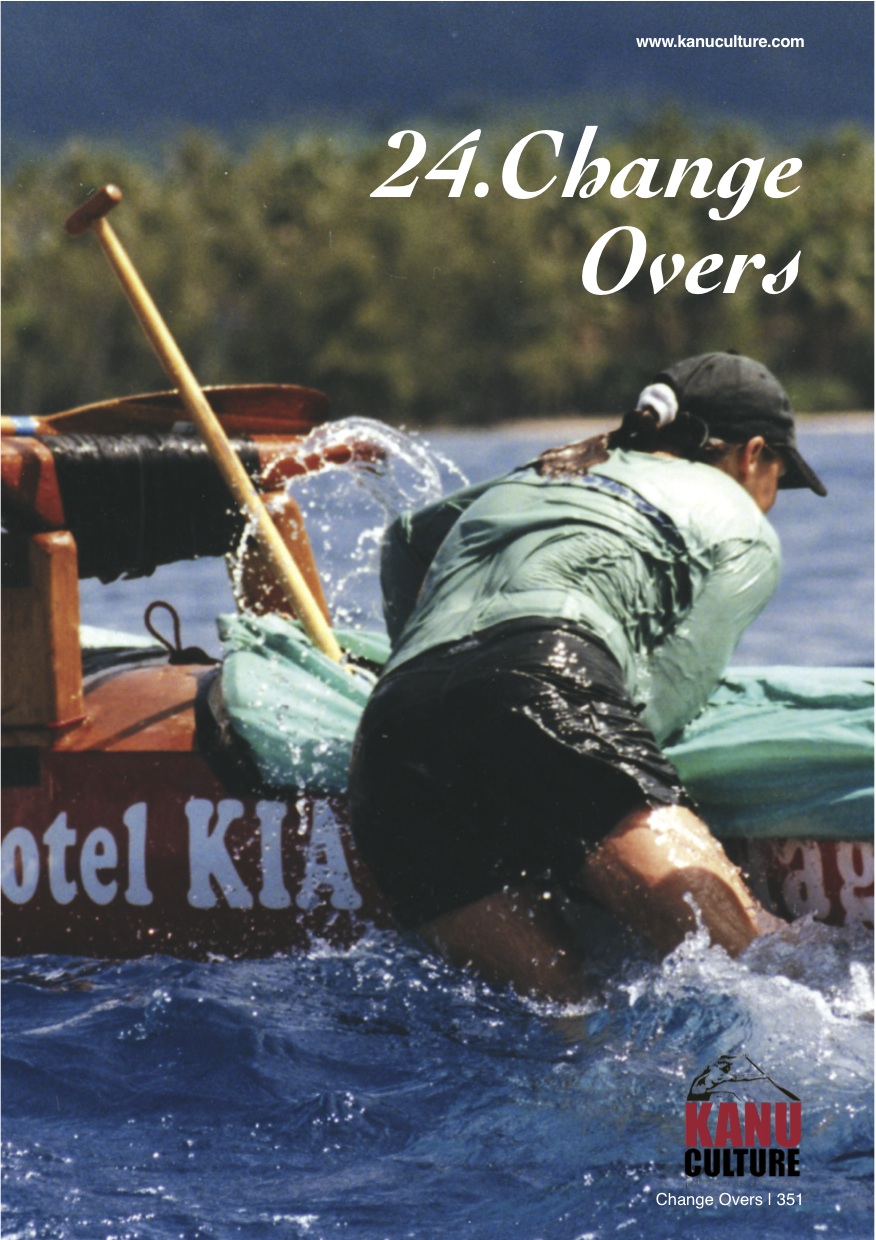
24. Change Overs
Distance races that incorporate change-overs add a dimension to va`a racing that is totally unique to the sport. It adds a dynamic that gives it a hardcore edge, an element of danger and intensity which increases the potential for error, putting added pressure on everyone from coach to paddler through to the support boat driver.
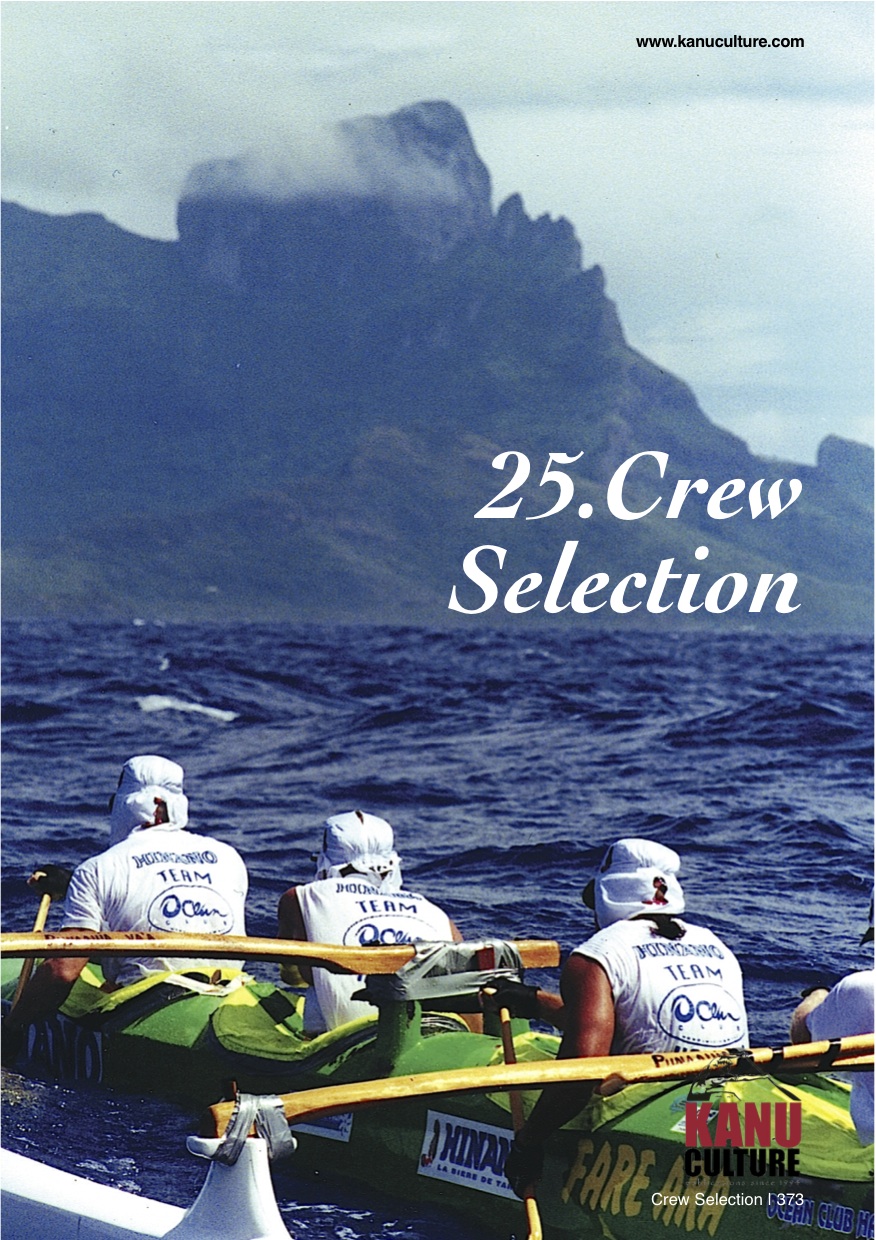
25. Crew Selection
No matter how fair and reasonable the system may be that the coach has in place for determining crew selection, someone will always feel hard done by when left out of a crew. It is important that the coach be able to justify their reasons as they refer the paddler back through the selection criteria. If you have no system in place, you fail to create an insurance policy which you can use and refer back to when explaining your final cut.
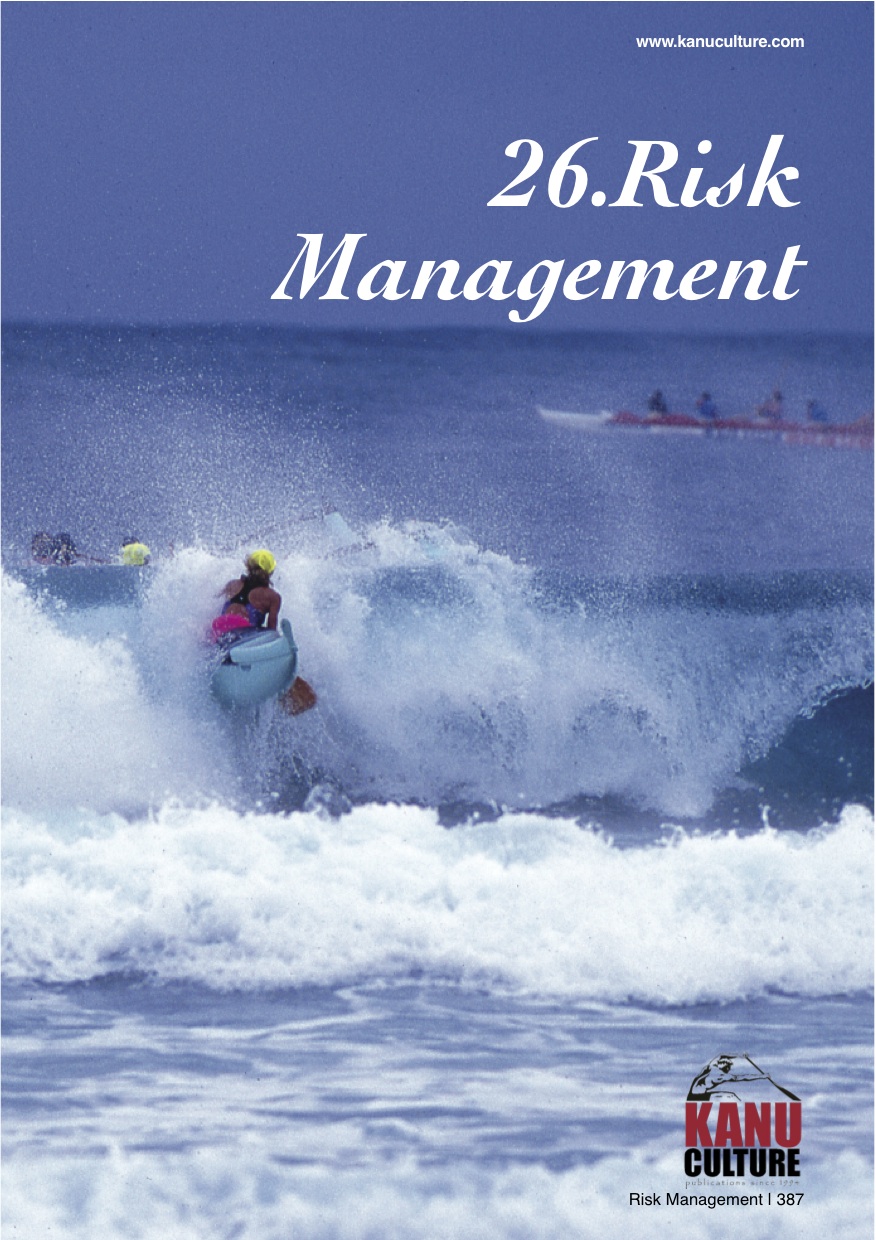
26. Safety Issues
Outrigger canoeists have been extremely fortunate in terms of avoiding tragedy, though there have been incidents. Death from hypothermia occurred in Oxnard, California in 1999. Inappropriate clothing, cold water and inexperience contributed to the deaths of two paddlers in only 45 minutes when their va`a over-turned and became disabled. Without the benefit of statistics, heart failure seems to be the most common cause of death while paddling. For some die-hard paddlers, perhaps it’s the noble way to shoot off this mortal coil. To what extent such cases were avoidable, I am not sure.
26. Road Trips
One of many factors making participation in this sport so enticing, addictive and alluring is the uniquely beautiful locations where it is practised. In so many ways, the sport allows you to combine overseas travel, vacation time and sport all in the one package in a way that few others can emulate. Additionally, the strong cultural affinity the va`a commands in many areas of the Pacific makes the experience educational and culturally enlightening.
The photos are predominantly as they happen, few are staged. Sincere thanks to Harvie Allison for supplying some truly amazing photography. His support of Kanu Culture over the years has been overwhelming. My thanks also to Joss of Hawaii, who has been, our man in Hawai`i, for many years and through his imagery has helped elevate the profile of the sport and also to California’s Daphne Hougard.
My list of thanks would fill another book and for fear of omitting someone over the course of these years, I decline to attempt it. But to all those who have helped and supported me and Kanu Culture over the years, my deepest thanks, there is a part of you in this book.
My thanks to Tahiti Tourism, Air Pacific, Air Tahiti Nui, Fiji Tourism, Palau Tourism, Marianas Tourism, Hamilton Island Resort, Infront Communications , Susan Boyd, Harvie Allison, Sue Sheard, Chris Maynard, Jim Foti , Todd Bradley , Colin Philp , Jackie Taylor, Kialoa Paddles and to my beautiful wife Mandy. STEVE WEST
ENVIRONMENTAL CONCERNS: We've taken environmental factors into consideration in the production of this new book, opting for 'Digital Printing', the future for environmentally conscious book manufacture. This process eliminates the need for lithographic plates and chemical usage and reduces waste disposal. We have also opted to use paper guaranteed to be grown under the guidance of the 'Forestry Stewardship Council' (FSC) who ensure the use of legal, sustainable, plantation timbers. Our chosen printers are at the top of the field in environmentally sound print production.